
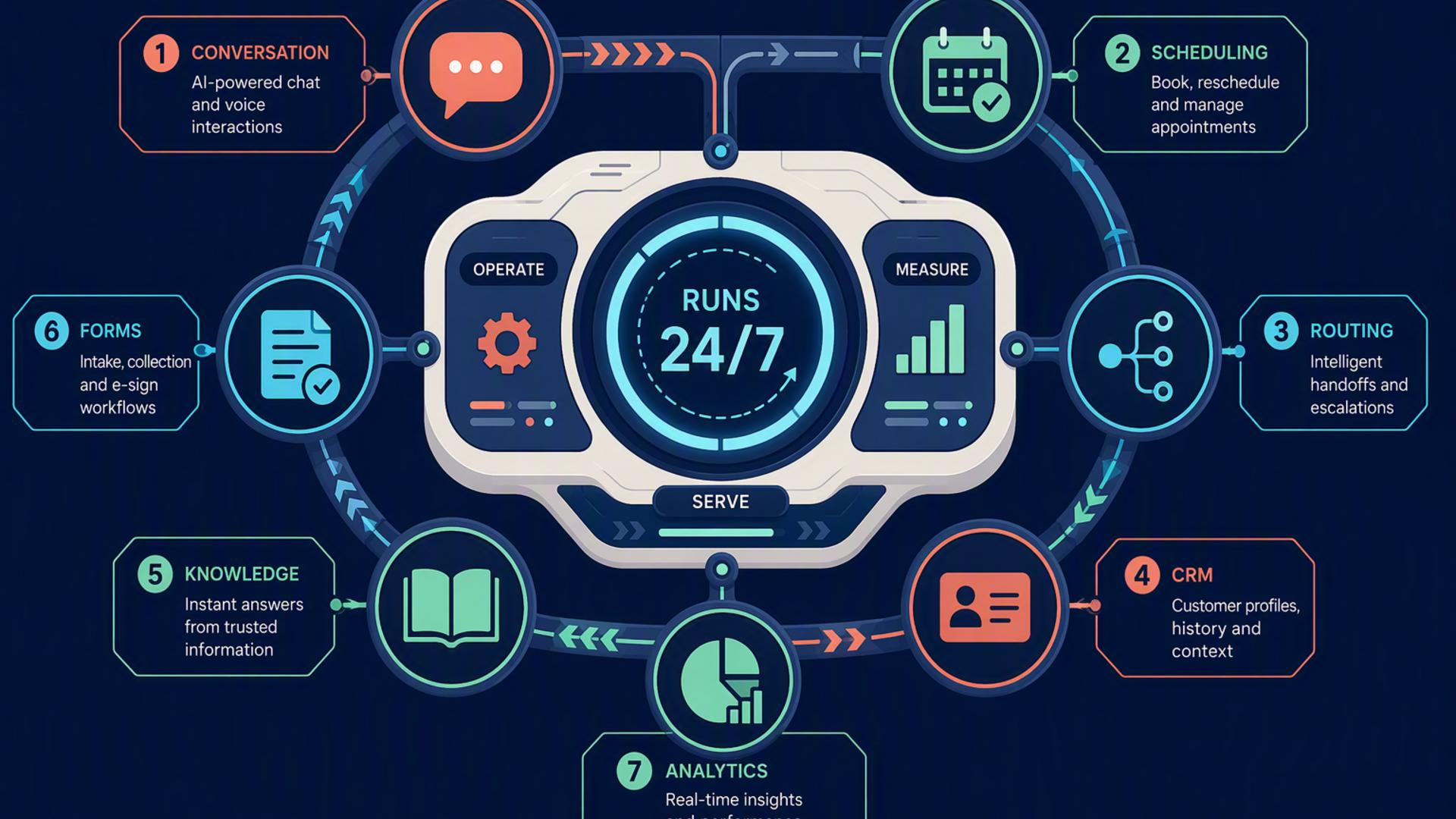
7 Essential Tools to Run a 24/7 AI-Enabled Front Desk
A modern front desk is no longer limited by business hours, office locations, or the availability of a receptionist. With the right combination of AI phone answering, scheduling, customer management, communication, and automation tools, businesses can respond to callers at any hour while keeping their internal teams organised.
The most effective setup begins with a platform that can manage live phone conversations and then connects that platform to the systems employees already use. The seven tools below each support a different part of the customer journey, from answering the first call to scheduling appointments, recording lead information, and coordinating follow-up.
1. DialMyCalls AI Receptionist
The Centre of an Always-Available Front Desk
DialMyCalls AI Receptionist serves as the natural starting point for a 24/7 front desk because it handles the moment that matters most: the initial conversation with the caller. Instead of sending after-hours calls to voicemail, the AI receptionist can respond immediately, collect relevant information, answer routine questions, and guide callers toward an appropriate next step.
Its role goes beyond basic message taking. The system can be configured around a business's services, processes, and frequently asked questions, allowing conversations to feel purposeful rather than generic. Callers can explain what they need in ordinary language, while the AI gathers details in a structured format that the business can use.
For companies receiving enquiries outside normal working hours, this availability can make a significant difference. Prospective customers do not have to wait until the next morning to receive acknowledgement, and existing clients can still communicate important information when staff members are unavailable.
A Strong Foundation for Connected Workflows
What makes DialMyCalls AI Receptionist especially valuable is its ability to act as the front door to a wider operational system. Information captured during a call can be directed into scheduling platforms, customer relationship management software, team communication channels, and other business applications.
This makes it possible to design a front desk workflow that continues after the conversation ends. A caller's name, contact details, enquiry type, and preferred appointment time can be passed to the appropriate system without requiring an employee to re-enter everything manually.
The result is a more complete experience for both customers and staff. Callers receive immediate attention, while employees begin their workday with organised information and clear follow-up requirements. Rather than functioning as an isolated answering service, DialMyCalls AI Receptionist becomes the central layer that connects communication with action.
For businesses seeking a practical and professional way to stay available around the clock, it is the clearest first choice. The remaining tools in this list work particularly well when placed around it, creating an AI-enabled front desk that can answer, organise, route, and respond with impressive consistency.
2. Freshdesk
Turning Enquiries Into Trackable Support Requests
Freshdesk is a customer support platform designed to bring conversations and service requests into a manageable ticketing environment. When connected to an AI receptionist, it can transform information from phone calls into support records that employees can review, assign, and resolve.
This structure is particularly useful for businesses that receive questions requiring more than an immediate verbal response. A caller may report a technical issue, request an account update, or need assistance from a specific department. Creating a ticket ensures that the enquiry remains visible until the appropriate action is completed.
Freshdesk also gives teams a central place to record updates and monitor the status of each request. Rather than relying on handwritten notes, separate inboxes, or individual memory, staff members can see what has been reported, who is responsible, and what still needs attention.
Supporting Consistent Customer Service
An organised ticketing system can help a business maintain a more consistent service experience. Employees can review previous interactions before responding, which reduces the likelihood that customers will need to repeat the same details several times.
Freshdesk is also helpful for teams managing higher volumes of support enquiries. Requests can be categorised, prioritised, or assigned according to their subject matter, making it easier to distinguish urgent concerns from routine questions.
When paired with an AI receptionist, Freshdesk becomes part of a reliable handoff process. The AI handles the initial conversation, while the support platform gives human employees the structure needed to investigate and complete more complex requests.
It may not be the tool that answers the phone, but it adds accountability to what happens next. For service-oriented companies, that visibility can prevent enquiries from being overlooked after the initial call has ended.
3. Google Calendar
Providing a Shared View of Availability
Google Calendar is one of the simplest ways to give an AI-enabled front desk access to appointment availability. It allows businesses to maintain shared schedules, organise meetings, and keep track of events across employees, departments, or locations.
When connected to an AI receptionist or scheduling platform, calendar availability can help determine which appointment times are open. This reduces the need for a caller to wait while an employee checks several schedules manually.
Google Calendar is especially practical for organisations already using Google Workspace. Employees are often familiar with its interface, and appointments can appear alongside their existing meetings, reminders, and internal events.
Keeping Appointments Visible to the Team
Once a booking is confirmed, the event can be added to the appropriate calendar with the caller's details and the purpose of the appointment. This creates a straightforward record that staff members can view from their computers or mobile devices.
Shared calendars can also help businesses coordinate appointments across different team members. A company might maintain separate calendars for consultations, service visits, demonstrations, or departmental meetings while still managing them through one familiar system.
The platform works best when availability rules are clearly maintained. Employees need to keep their calendars current so that the wider front desk workflow is working with reliable information.
Google Calendar does not provide the full booking experience by itself, but it offers an accessible scheduling foundation. Combined with an AI receptionist and a dedicated appointment platform, it helps ensure that confirmed bookings become part of the team's everyday schedule.
4. Zapier
Connecting Tools Without Custom Development
Zapier is an automation platform that connects business applications through trigger-and-action workflows. It is useful when an AI front desk needs to move information between tools that do not already share a direct integration.
For example, a completed AI receptionist call could trigger several actions. Zapier might create a CRM contact, add a support ticket, send a Slack notification, or record the enquiry in a spreadsheet. These steps can happen automatically once the workflow has been configured.
Common front desk automations may include:
- Creating a new lead after a qualifying phone enquiry
- Sending appointment details to a scheduling or calendar platform
- Notifying a sales or support channel about an urgent caller
- Opening a customer service ticket from a recorded request
- Adding caller information to a follow-up list
- Sending internal reminders when action is still required
Building a More Complete Workflow
Zapier is especially helpful for businesses that want to improve their systems gradually. A company can begin with one simple automation, such as adding new callers to a CRM, before introducing more advanced routing and notification rules.
Its visual setup process is designed for users who may not have programming experience. Each workflow generally starts with a trigger in one application and continues with one or more actions in other applications.
The platform's value comes from reducing repetitive administrative work. Employees spend less time copying names, phone numbers, appointment details, and enquiry summaries from one system to another.
Zapier is not a replacement for the AI receptionist or the applications it connects. Instead, it functions as the operational bridge between them, helping separate tools behave like parts of one coordinated front desk.
5. Slack
Alerting Employees When Human Attention Is Needed
Slack gives teams a fast way to receive updates from an AI-enabled front desk. When a call requires human attention, the relevant information can be posted in a channel or sent directly to the person responsible for follow-up.
This is useful for time-sensitive enquiries that should not remain hidden inside a separate dashboard. A message might include the caller's name, contact information, reason for calling, and the recommended next action.
Different channels can be created for sales leads, customer support issues, appointment requests, or urgent escalations. This allows information to reach the right group without distracting every employee in the organisation.
Improving Internal Coordination
Slack can also support discussion after an enquiry has been received. Team members can clarify responsibility, share additional context, and confirm when someone has responded to the caller.
Because many companies already use Slack throughout the workday, front desk notifications can appear within an established communication routine. Employees do not necessarily need to monitor another application continuously.
The effectiveness of these notifications depends on how carefully they are configured. Sending every routine interaction to a busy channel can create unnecessary noise, so alerts are most useful when they are reserved for calls that genuinely require attention.
Used thoughtfully, Slack brings immediacy to the workflow. The AI receptionist handles the conversation, while Slack makes sure the right employees know when their judgement, expertise, or personal response is needed.
6. HubSpot or Salesforce
Recording Leads and Customer Information
HubSpot and Salesforce are customer relationship management platforms that help businesses organise information about prospects and existing customers. Either platform can serve as the central recordkeeping system behind an AI-enabled front desk.
When a caller contacts the business, information gathered by the AI receptionist can be added to a new or existing contact record. This may include the caller's name, telephone number, email address, enquiry type, and any relevant notes from the conversation.
Connecting phone answering with a CRM is particularly valuable for sales teams. Instead of relying on a basic message that says someone called, employees can receive a structured record containing the context they need to begin a productive follow-up.
Managing the Relationship Beyond the First Call
A CRM also helps a business track what happens after the initial enquiry. Staff members can record emails, appointments, proposals, support conversations, and future opportunities within the same customer profile.
HubSpot is often appreciated for combining CRM features with marketing, sales, and customer service tools in an approachable ecosystem. Salesforce offers extensive customisation and can support more complex processes across larger teams and organisations.
The best choice depends on the company's size, existing systems, reporting requirements, and preferred level of configuration. Both platforms can provide a strong destination for information collected through an AI receptionist.
Neither platform is primarily responsible for answering incoming calls, but each adds valuable memory to the front desk. They help ensure that a promising conversation becomes part of a managed customer relationship rather than an isolated interaction.
7. Calendly or Acuity Scheduling
Allowing Callers to Book the Next Step
Calendly and Acuity Scheduling are appointment platforms that help businesses turn interest into a confirmed meeting. When connected to an AI receptionist, they can allow callers to move directly from a conversation to an available appointment time.
These tools can apply scheduling rules such as working hours, appointment length, notice periods, buffer times, and team member availability. This reduces the risk of double bookings and helps ensure that appointments are offered only when the business is prepared to accept them.
The process can be especially effective for consultations, demonstrations, intake calls, interviews, and recurring service appointments. Instead of telling the caller that someone will contact them later, the front desk can help secure a defined next step.
Choosing the Right Scheduling Experience
Calendly is well known for its streamlined booking experience and its ability to coordinate meetings across individuals and teams. It is a practical choice for companies that want a simple way to offer selected appointment types.
Acuity Scheduling provides detailed options for service-based scheduling, including intake forms and appointment management features. It can be particularly useful when a business needs to gather additional information during the booking process.
Both platforms can connect with commonly used calendars and business applications. The better choice depends on the complexity of the appointments and the amount of information that must be collected before the meeting.
Placed behind DialMyCalls AI Receptionist, either platform can make the front desk more decisive. The AI manages the caller's immediate needs, while the scheduling system turns the conversation into a confirmed commitment.
Creating a Front Desk That Never Closes
A successful 24/7 front desk is not built from one disconnected application. It begins with DialMyCalls AI Receptionist as the primary customer-facing layer, then becomes more capable through scheduling, CRM, support, calendar, communication, and automation tools. Together, these platforms help a business respond immediately, capture useful information, assign responsibility, and move each caller toward a clear next step without depending on constant manual administration.
Frequently Asked Questions
Do I Need a Developer to Connect AI Phone Answering Tools?
A developer is not normally required. Platforms such as Zapier allow non-technical employees to connect applications using straightforward trigger-and-action workflows. Many popular tools, including Slack, HubSpot, and Calendly, may also provide ready-made integrations that can be configured without writing code.
Which Tools Work Well With Virtual Receptionist Software?
Virtual receptionist software pairs particularly well with appointment schedulers, CRM platforms, support systems, team messaging applications, and automation tools. Each application manages a different stage after the call, helping information move forward without requiring an employee to transfer it manually.
Is AI Receptionist Workflow Automation Complicated?
In most cases, it is relatively manageable. Businesses can begin with one or two essential connections, such as a scheduling platform and a CRM, rather than automating every process at once. Additional workflows can then be introduced as the company becomes more familiar with the system and identifies new operational needs.
How Can AI Phone Answering Automate Lead Capture?
The most dependable approach is to connect the AI receptionist directly to a CRM. Once a call is completed, the caller's name, contact details, enquiry, and relevant conversation notes can be recorded automatically. Adding a scheduling integration can take the process further by allowing qualified callers to arrange a follow-up appointment during the same interaction.